
Commercial Tobacco Use
- Commercial Tobacco Use Home
- Data and Reports
- Get Help Quitting
- Prevention and Treatment
- Tobacco and Your Health
Learn More
- Behavioral Health and Commercial Tobacco
- E-cigarettes and Vaping
- Flavors and Industry Targeting
- Nicotine and Nicotine Dependence
- Nicotine Pouches and Other Emerging Products
- Promoting Quitting and Treatment
- Secondhand Smoke and Aerosol
- Smoke-Free Housing
- Tobacco 21
- Traditional and Sacred Tobacco
Related Topics
Contact Info
Commercial Tobacco Use
Traditional and Sacred Tobacco
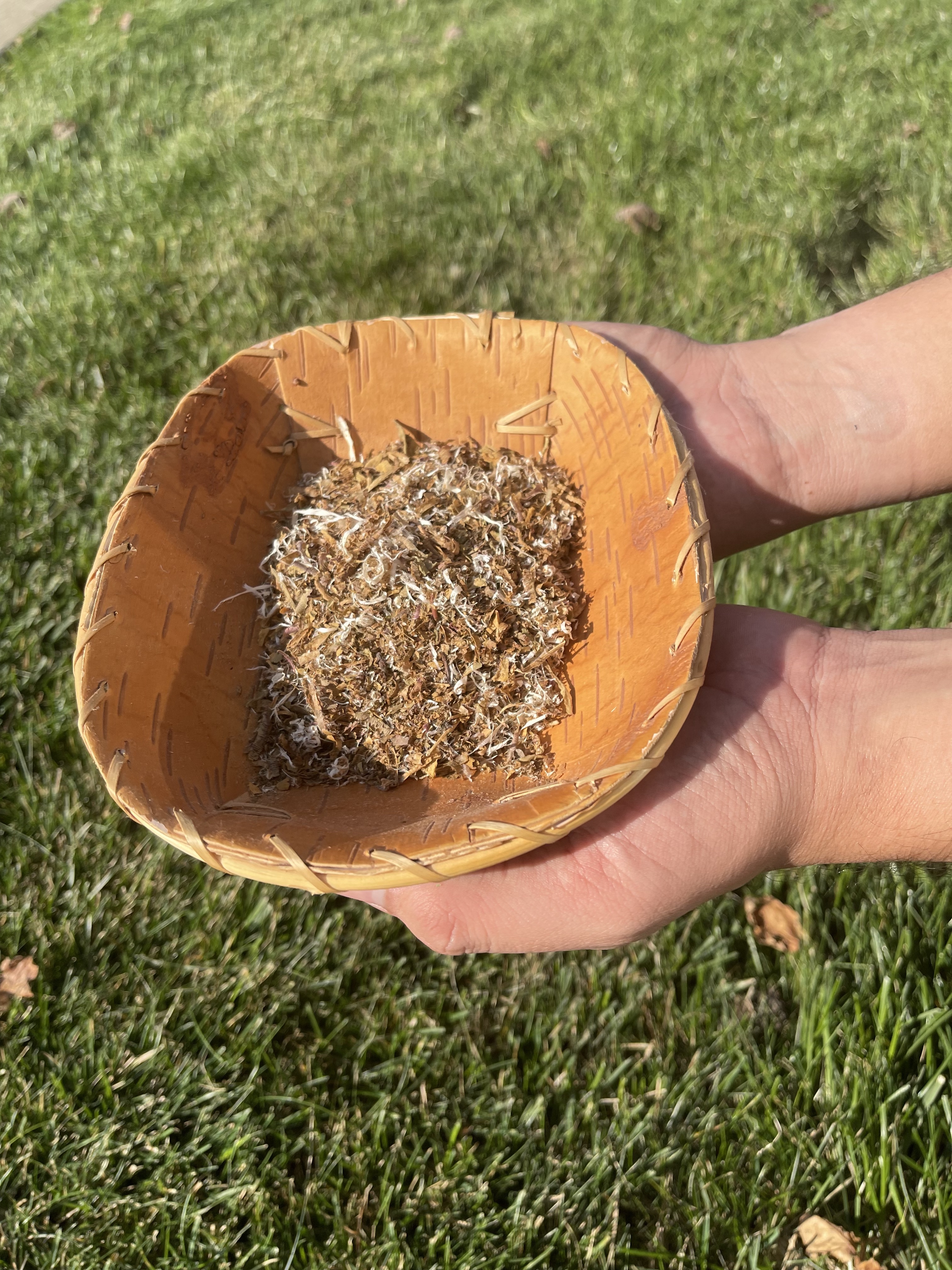 Many communities in Minnesota have a unique relationship with traditional, or sacred, tobacco. The tobacco plant is considered a sacred gift by American Indian and Alaska Native communities and has been used for spiritual and medicinal purposes for generations. It is central to culture, spirituality, and healing.
Tribal methods and ingredients differ, but traditional tobacco, called “caŋsasa” (in Dakota) or “asemaa” (in Anishinaabek) by area tribes, is carefully hand-prepared and offered respectfully for prayer, healing, and ceremony. Traditional tobacco use varies by tribe - some tribes do not use any traditional or sacred tobacco.
Traditional tobacco is different from commercial tobacco, like cigarettes, cigars, and chew. Traditional tobacco is natural, not inhaled or addictive, and has no additives. Commercial tobacco products are manufactured and sold by the tobacco industry. They're designed to be highly addictive, and they contain cancer-causing chemicals and additives. Learn more: Traditional Tobacco | National Native Network
Reclaiming Sacred Tobacco in Minnesota’s Indigenous Communities
 Watch Reclaiming Sacred Tobacco in Minnesota’s Indigenous Communities to learn more about traditional tobacco and how American Indian communities in Minnesota use traditional practices to promote a healthier lifestyle.
Watch: Reclaiming Sacred Tobacco in Minnesota’s Indigenous Communities | Twin Cities PBS
Federal policies and the devastation of American Indian communities
American Indians have faced historical trauma, forced assimilation efforts, and several forms of genocide that continue to negatively affect their health (see Determinants of Indigenous Peoples’ Health by Greenwood, et al.). Colonization and cultural genocide of Indigenous peoples in the United States devastated traditional systems that naturally fostered physical activity, healthy diet, use of traditional tobacco, and spiritual connection with the land.
The United States government has a longstanding history of policies designed to destroy American Indian culture (see Freedom, Law, and Prophecy: A Brief History of Native American Religious Resistance by Lee Irwin). The first policy of cultural genocide was the Indian Civilization Fund Act of 1819, which was created to “… ‘civilize’ Indian peoples in accordance with alien cultural norms imposed on them by a conquering majority.” This was followed by several other federal policies designed to “kill the Indian and save the man.” The Indian Religious Crimes Code of 1883 tried to end American Indian religion. This law “prohibited Native American ceremonial activity under pain of imprisonment.” American Indians could not freely practice their religion until 1978, when the American Indian Religious Freedom Act was passed. For centuries, American Indians did not have access to traditional tobacco for cultural and religious purposes. American Indians only had access to highly addictive and harmful commercial tobacco. This resulted in addiction to commercial tobacco, such as smoking cigarettes. Because of these forced cultural shifts, commercial tobacco use is a driver of health inequities among American Indian populations.
Health inequities driven by policy failures and industry targeting
In addition to not having access to traditional tobacco, American Indian communities have been specifically targeted by the tobacco industry’s marketing tactics for decades (see Tobacco industry misappropriation of American Indian culture and traditional tobacco by D’Silva, et al.). As sovereign nations, American Indian tribes have self-governing abilities that are equivalent to the federal level of U.S. law. As such, tribal nations are not subject to laws or policies enacted at the state or local levels. Given this unique status, American Indian governments are often excluded from local policy change initiatives. Many state and local commercial tobacco control policies, such as clean indoor air policies and retail practice regulations, have driven the sharp decline in smoking in the general population. However, due to the lack of partnerships between local governments and tribal nations, commercial tobacco use rates in many tribal nations has remained at higher levels.
Due to all of these reasons – historical trauma, forced assimilation efforts, genocide, policy failures, and targeted commercial tobacco agendas – American Indians suffer from some of the highest rates of smoking and chronic diseases and have the lowest life expectancy of any group in the United States.
Commercial tobacco use among American Indian adults in Minnesota
In Minnesota, 46% of American Indian adults smoke commercial tobacco, according to data from the Tribal Tobacco Use Project II. Among Minnesota adults overall, 10.2% smoke, according to 2024 data from the Behavioral Risk Factor Surveillance System.
Healing communities harmed by federal, state, and local policies
Mainstream public health efforts have often not been culturally tailored to address poor health outcomes in the American Indian population and as a result have been largely unsuccessful. Promising practices rooted in culture are now emerging. Sacred Traditional Tobacco for Health Native Communities | American Indian Cancer Foundation (PDF) shows what policy, systems, and environmental changes focused on restoring a balance around traditional tobacco could look like for American Indian communities.
Returning to the sacred use of traditional tobacco and restoring American Indian cultural practices is a protective factor in reducing the number of American Indian youth who begin using commercial tobacco, according to the 2008-2009 Wisconsin American Indian Youth Tobacco Survey. In addition to community health, health for American Indian people should focus on the whole person and include mental, spiritual, emotional, and physical health. Current efforts to reclaim the language and traditions of the American Indian people are aimed at restoring the health of the community and on sharing those healthy ways of being with other people in Minnesota.
Inclusive language is critical for effective commercial tobacco prevention
It is important to acknowledge the traditional role tobacco plays in Indigenous culture as a way to counter the high rates of commercial tobacco use and smoking-related diseases in American Indian and Alaska Native communities. The American Indian Cancer Foundation and University of Minnesota’s School of Journalism and Mass Communication conducted a study of tobacco messaging in American Indian communities (see Effects of culturally tailored smoking prevention and cessation messages on urban American Indian youth by Yzer, et al.). They found that people in these communities respond more positively to culturally appropriate messages like “keep tobacco sacred,” rather than generic tobacco communication or messages about health consequences like “live tobacco-free.” Including cultural cues in commercial tobacco prevention and cessation messages can positively affect people’s thoughts about traditional and commercial tobacco.
The Minnesota Department of Health is committed to differentiating between traditional and commercial tobacco in communications. We recognize the importance of traditional tobacco in American Indian communities and that these communities cannot be “tobacco-free.” We continue to work in partnership with American Indian communities to address the harms of commercial tobacco.
Reclaiming Tribal traditions to address the harms of commercial tobacco
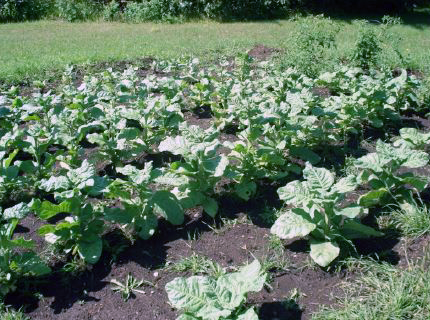 The Minnesota Department of Health funds Tribal Nations’ and urban American Indian communities’ tobacco efforts to help build strong, community-based prevention programs and reclaim Tribal traditions.
American Indian communities in Minnesota will continue to determine the focus of their commercial tobacco prevention efforts, which include:
- Engaging communities with knowledge of cultural practices around traditional tobacco and the harms of commercial tobacco use
- Increasing access to traditional tobacco by growing and harvesting asemaa (Anishinaabek) and caŋsasa (Dakota) for ceremonial use
- Sharing the history, origins, and purpose of traditional tobacco to continue the tradition among American Indians and to educate non-natives
- Participating in the development of commercial tobacco treatment and cessation programming designed for American Indians
Learn more: Tribal SHIP and Tribal Tobacco Grants
The American Indian Quitline: Free help to quit commercial tobacco
 Developed with guidance from the community, the American Indian Quitline offers free and specially designed support for all American Indian adults living in Minnesota. Free help includes:
- A dedicated team of American Indian coaches who understand your culture and respect your traditions
- One-on-one coaching calls
- Quit medications like lozenges, gum, or patches
- Text messages and emails support
Call 1-833-9AI-QUIT (1-833-924-7848) or visit aiquit.com to sign up or learn more.