

Health Care Homes Sustainability Roadmap
Care Coordination
By shifting our focus, and our dollars, to prevention and whole person care that addresses physical and emotional well-being, along with social factors such as education, income, housing, and transportation, we can create a more accessible and equitable system to improve the health of all Minnesotans.
Care coordination is a team-based approach that engages the patient, clinician, and other members of the Health Care Homes (HCH) team to enhance overall well-being. Organizing timely access to resources and necessary care supports continuity, strengthens trust, and promotes better health outcomes.
A foundational goal of the HCH program is to expand care coordination capacity to support whole-person care while advancing population health and health equity. Effective care coordination is central to sustaining the HCH model and delivering meaningful, measurable improvement in health outcomes.
Strategies
- Implement and sustain evidence-informed workflows.
Identify, implement, and maintain best practices and evidence-informed workflows that advance practice transformation and improve health outcomes and equity.
- Allocate staff time for core care coordination functions.
Provide dedicated time for care coordination activities, including information sharing, goal setting, care planning, follow-up support, and attention to patient and family needs.
- Support team members to work at the top of their scope.
Permit and encourage team members to work at a level that fully utilizes their licensure, training, and skills to maximize care coordination capacity.
- Incorporate diverse perspectives in planning and decision making.
Engage diverse populations in developing policies, workflows, and strategic plans. Leverage members of the workforce—such as Community Health Workers (CHWs)—who have lived experience and trusted relationships within the community.
- Strengthen care transitions.
Implement processes that support safe and seamless transitions across care settings to reduce readmissions, adverse events, and unnecessary emergency department utilization.
Resources
Additional evidence-based toolkits and guides are available to support implementation of care coordination across diverse care settings, to improve care transitions, chronic disease management, and integration with social supports. These resources can help HCH certified clinics assess readiness, define roles/workflows, build community partnerships, and monitor quality and outcomes.
General Care Coordination Frameworks
- The Primary Care Collaborative (PCC)
- Care Coordination | Agency for Healthcare Research and Quality (AHRQ)
- Care Coordination Fundamentals: Teacher Guide (PDF) | Primary Care Development Corporation (PCDC)
- Community Health Worker Initiatives | Minnesota Department of Health (MDH)
- Minnesota 2035 Plan | Minnesota Department of Health (MDH)
Toolkits
- Care Coordination Toolkit (PDF) | Centers for Medicare & Medicaid Services (CMS)
- Care Coordination Toolkit: A Guide to Implementing Care Coordination Elements into Clinic Workflow (PDF) | Louisiana Department of Health
- Care Coordination Toolkit | Stratis Health
- Chronic Care Management Toolkit (PDF) |Centers for Medicare & Medicaid Services (CMS)
Stories
How Patient- and Family-Centered Care Coordination Changed Our Lives
(Jeanne's Story)
Within certified Health Care Homes (HCH) across Minnesota, care teams work tirelessly each day—supporting patients, guiding families through complex systems, and coordinating care that improves outcomes. Often, the demands and urgency of the work overshadow the profound difference this support makes in people’s lives. Sometimes, we need to pause and view that impact through the eyes of those we serve.
This is Jeanne’s perspective of her Health Care Homes care coordination team—and how their partnership helped carry her and her husband through unimaginable challenges.
“My introduction to Care Coordination is courtesy of my husband, Jay.”
On October 1, 2019, my husband Jay was an active builder, swinging from trusses thirty feet in the air. On October 2, everything changed. His fall—approximately twenty-five feet—broke his right hip, shattered ribs, and compressed vertebrae. His hip was replaced. His ribs had to be surgically fixated. But by early 2020, after months of recovery, a new and more devastating health battle surfaced. By June, Jay was diagnosed with Aggressive Large B-Cell Primary CNS Lymphoma.
Those months ushered in a blur of crises: inpatient chemotherapy requiring constant travel between Mayo and Alomere… a spontaneous subdural hematoma… a period of steroid- and chemo-induced mania… a stem cell transplant… and then, fractures as his bones began to weaken and break. Jay’s care expanded to more than a dozen departments across multiple systems—plus frequent visits to our local clinic, physical therapy, lab, imaging, infusion, urgent care, and an emergency department less than ten minutes from our home.
There were days when I didn’t know how we would keep going.
“I had no idea the toll of becoming a 24/7 caregiver.”
My first introduction to care coordination came after Jay’s initial chemo treatment, when Denise—his Humana care coordinator—called to offer help. At the time, I brushed it off politely. I’d always handled things myself. But as Jay’s needs intensified, I found myself overwhelmed by the nonstop caregiving, the constant decisions, and the responsibility of managing every detail of our daily lives.
Soon, I learned to depend on Denise during moments of complete exhaustion. When she transitioned me to Theresa, I was guided step-by-step through the complexities of Jay’s stem cell transplant.
So when Alomere asked if I wanted to enroll in their Care Coordination program, I said yes immediately—and I have been grateful ever since. When Jay later lost his Humana coverage, I don’t know what I would have done without Lexi at Alomere.
“Having someone who knows his history is GOLDEN.”
Jay regularly sees upward of a dozen specialists. He has countless labs, infusions, imaging appointments, and prescriptions. Care Coordination has been our lifeline—keeping everything organized, checking on Jay regularly, communicating with his providers, and ensuring nothing falls through the cracks.
Their work has:
- Helped us avoid unnecessary emergency visits
- Directed Jay to the right services quickly
- Saved hours of phone calls and scheduling burdens
- Reduced delays in getting urgent care
- Protected my emotional health as a caregiver
- Quite possibly saved Jay’s life
One example remains unforgettable. Last August, I called with only a vague concern—a gut feeling that something wasn’t right. Because the Care Coordination team knew Jay’s history and trusted my instincts, they facilitated a quick visit to urgent care. Routine labs—ordered only because of their familiarity with him—revealed sepsis. Jay was admitted for five days. That call may have saved his life.
“Sometimes the person who answers the phone is the difference between panic and peace.”
Just last Thursday, Jay had an alarming episode of confusion. I feared his lymphoma had returned. I considered going straight to the emergency department, but the thought of explaining his complicated history to yet another provider who didn’t know his baseline felt overwhelming. So I called Care Coordination.
Lexi answered—and instantly understood my fear. She recognized Jay’s history, listened closely, and helped us find the best option for immediate care. It spared us unnecessary trips to Rochester or the ED, preserved the time of multiple departments, and most importantly, gave me peace of mind.
Jay received the right level of care, from people who know him, right here at home.
“Care Coordination is vital—and it has changed our lives.”
Our journey has been long, complicated, and often frightening. But because of the Alomere Care Coordination Team, we have had guidance, compassion, and a reliable partner every step of the way. Their support has allowed me to continue caring for Jay, maintain our quality of life, and navigate each new challenge with far less fear.
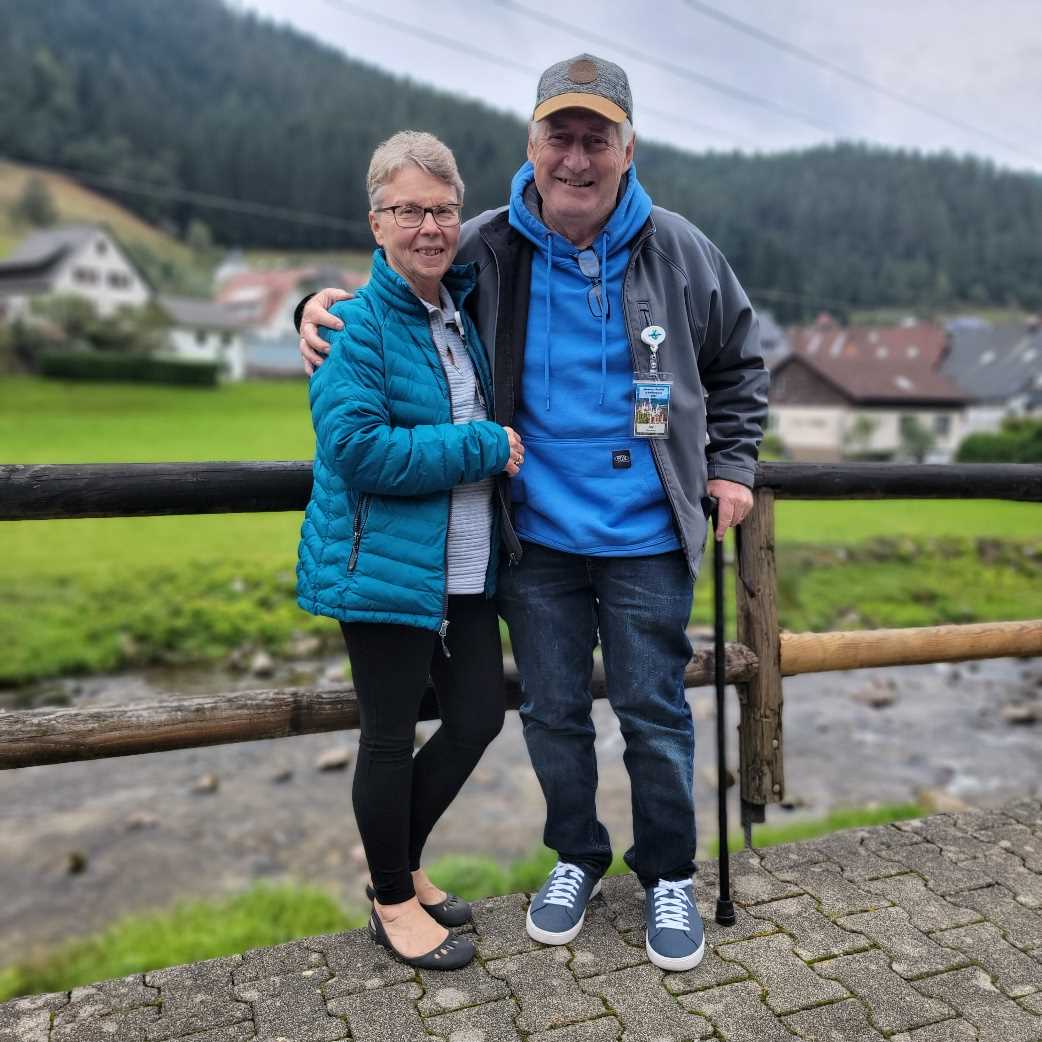 To the team that has walked with us through the hardest years of our lives:
Thank you for providing this vital service.
Community Health Workers: A Sustainable Approach to High-Quality Care Coordination
 The Community-University Health Care Center (CUHCC) in Minneapolis, a certified Health Care Home since 2014, has long been a leader in delivering culturally responsive care to some of Minnesota’s most diverse and medically complex communities. With patients representing dozens of languages and facing multiple social and economic challenges, CUHCC recognized early that sustainable, high-quality primary care requires more than clinical expertise. It requires strong care coordination and a workforce that reflects and understands the community.
To meet this need, CUHCC transformed its Community Health Worker (CHW) program from a stand-alone outreach function into a fully integrated part of its primary care model. CHWs now work side-by-side with clinical teams, participating in daily huddles, supporting shared care plans, and addressing social drivers of health that directly influence patient outcomes. Their cultural and linguistic expertise builds trust among patients who might otherwise struggle to navigate the health system. Their work spans chronic-disease support, health education, cancer screening outreach, transportation coordination, and linkage to community and social services.
The impact is clear. CUHCC has seen measurable improvements in controlled blood pressure and preventive cancer screenings—demonstrating that CHWs are highly effective when deeply embedded within the care team. By refining workflows, clarifying responsibilities, and improving documentation practices, CUHCC has also positioned itself to bill for CHW services if this becomes an option for Minnesota’s federally qualified health centers. CUHCC has demonstrated that investing in CHWs is not only good for patient care, but also a viable strategy for community primary care clinics.
One example underscores this value: a CHW supported an elderly patient who repeatedly missed diabetes appointments due to transportation barriers and confusion about medication instructions. Through a home visit, coordination with community partners, and culturally attuned patient education, the CHW helped the patient re-engage in care and significantly improve his health outcomes. Stories like this occur across CUHCC every day—evidence that CHWs deliver a level of trust and problem-solving capacity that traditional clinical workflows alone cannot offer.
CUHCC’s CHW program offers a compelling blueprint for how community primary care can thrive. By centering community expertise and trust within the care team, CUHCC has created a model that is sustainable for patients, staff, and the broader health system. Their work shows how CHWs strengthen whole-person care and advance equitable, resilient primary care for the long term.