
Transforming Minnesota's Public Health System
- Home: System Transformation
- About This Work
- Framework of Foundational Responsibilities
- Definitions, Criteria, and Standards for Fulfillment
- Joint Leadership Team
- Minn. Infrastructure Fund and Local Innovation Projects
- Governance Groups and Communities of Practice
- Data Modernization
- Regional Data Models
- Tribal Public Health Capacity and Infrastructure
- FPHR Grant: Funding for Foundational Responsibilities
- Reports, Fact Sheets, Resources
- News & Blog: Public Health System Transformation Update
- Message Toolkit
Related Sites
Contact Info
Regional Models to Collect, Use, and Share Local Population Health Data
Transforming the public health system in Minnesota
A strong public health data infrastructure across Minnesota means that, no matter where you live, your local health department can make data-driven decisions to meet your community’s health needs and priorities. Regional data models are helpful in building capacity to use population health data, and meeting foundational public health responsibilities, in a right-sized way between centralized and local.
On this page
What is a regional data model?
Key details at a glance
Timeline and rollout
Current regional data models
Logistics: Who joins a regional model? How do they operate?
Why do we have regional models? Local, state, and system benefits
Apply for funding
Questions, assistance, and community of practice
Related
What is a regional data model?
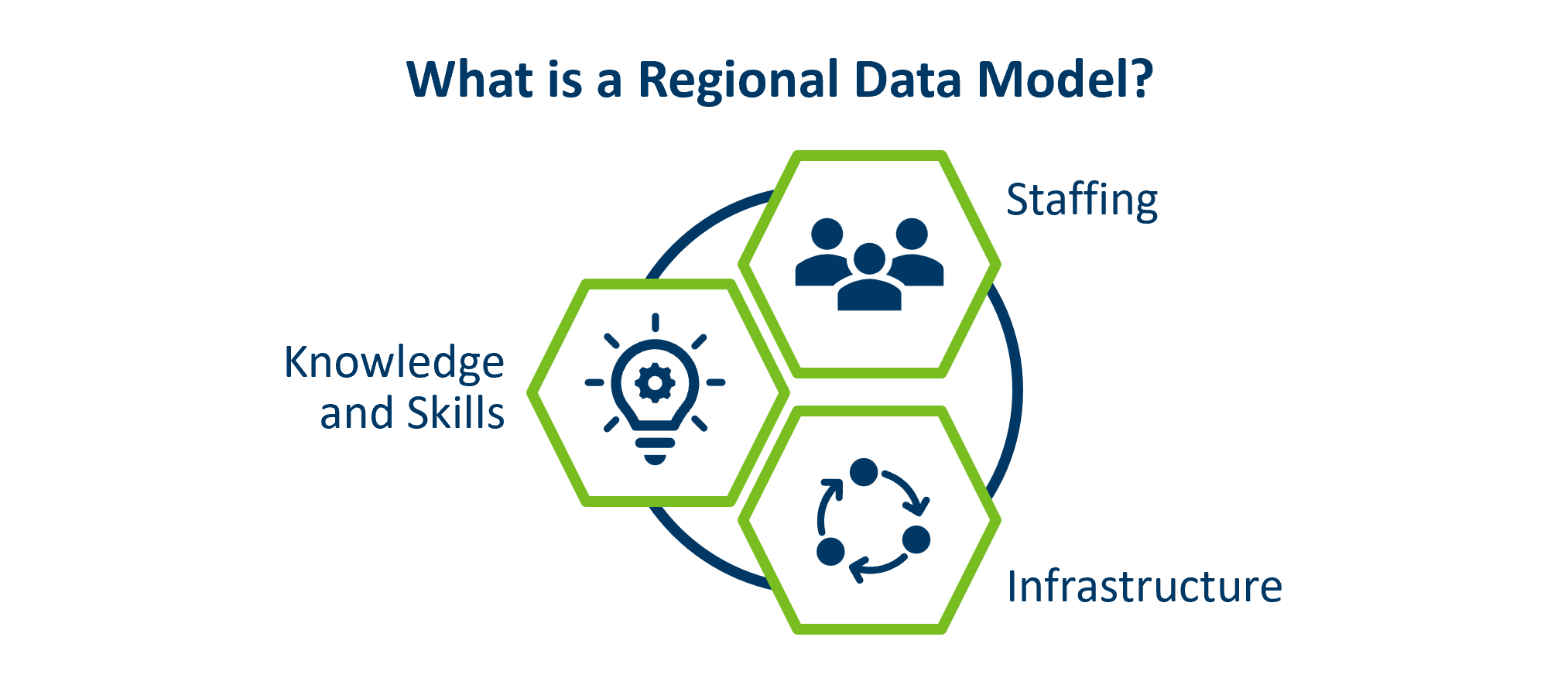
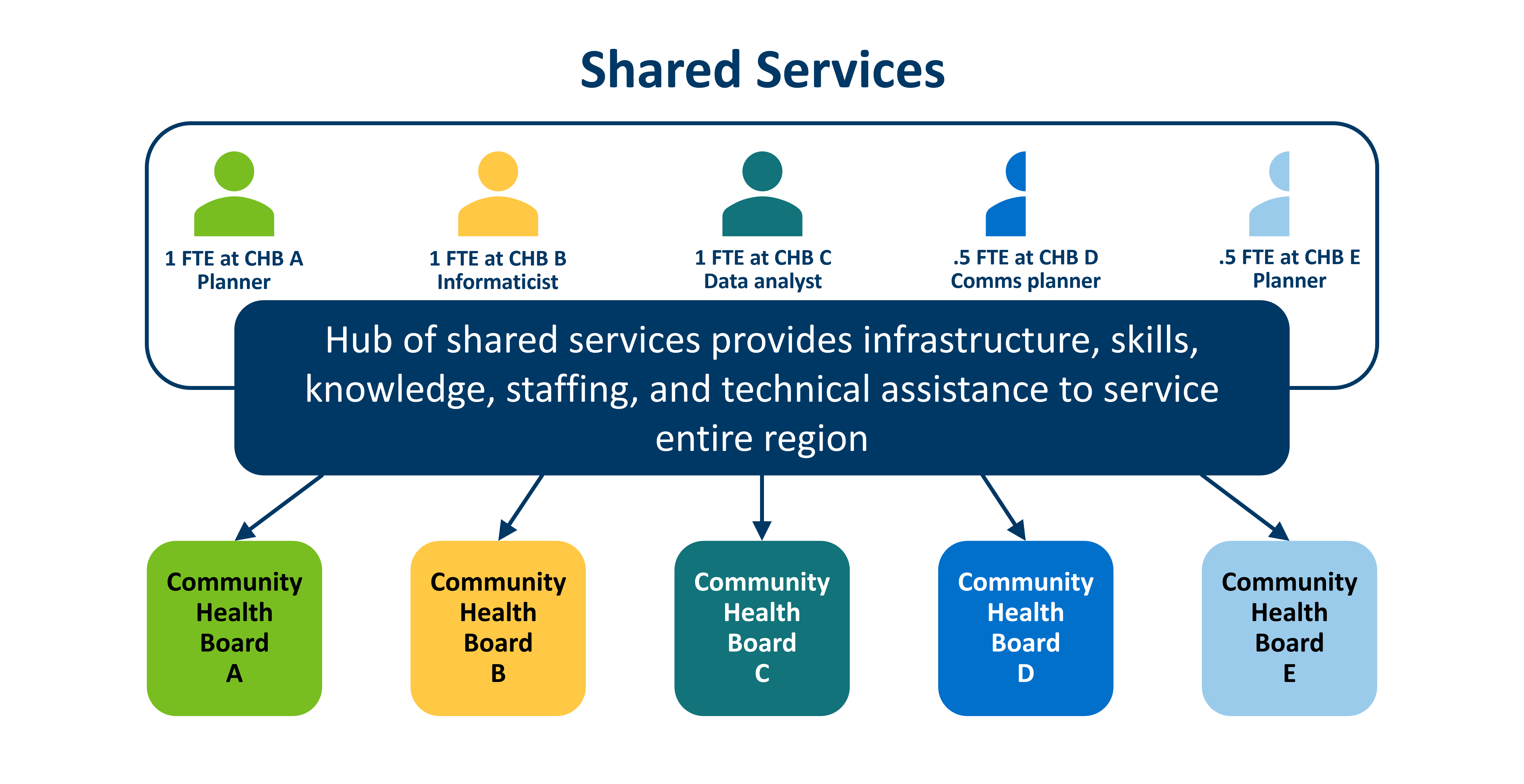
A regional data model creates a structure that organizes and shares resources across jurisdictions to increase data capacity across the region.
- Staffing: Staff or staff time dedicated to providing foundation public health data capabilities.
- Knowledge and skills: Expertise and ability to access, collect, analyze, interpret, manage, share/communicate data and use data to inform decision-making and public health practice.
- Infrastructure: Structure, systems, and processes to deliver increased data capacity across the region and translate data into public health action; may include the development of tools like dashboards.
Learn more: Webinar: Regional data models (October 2025)
Current regional data models
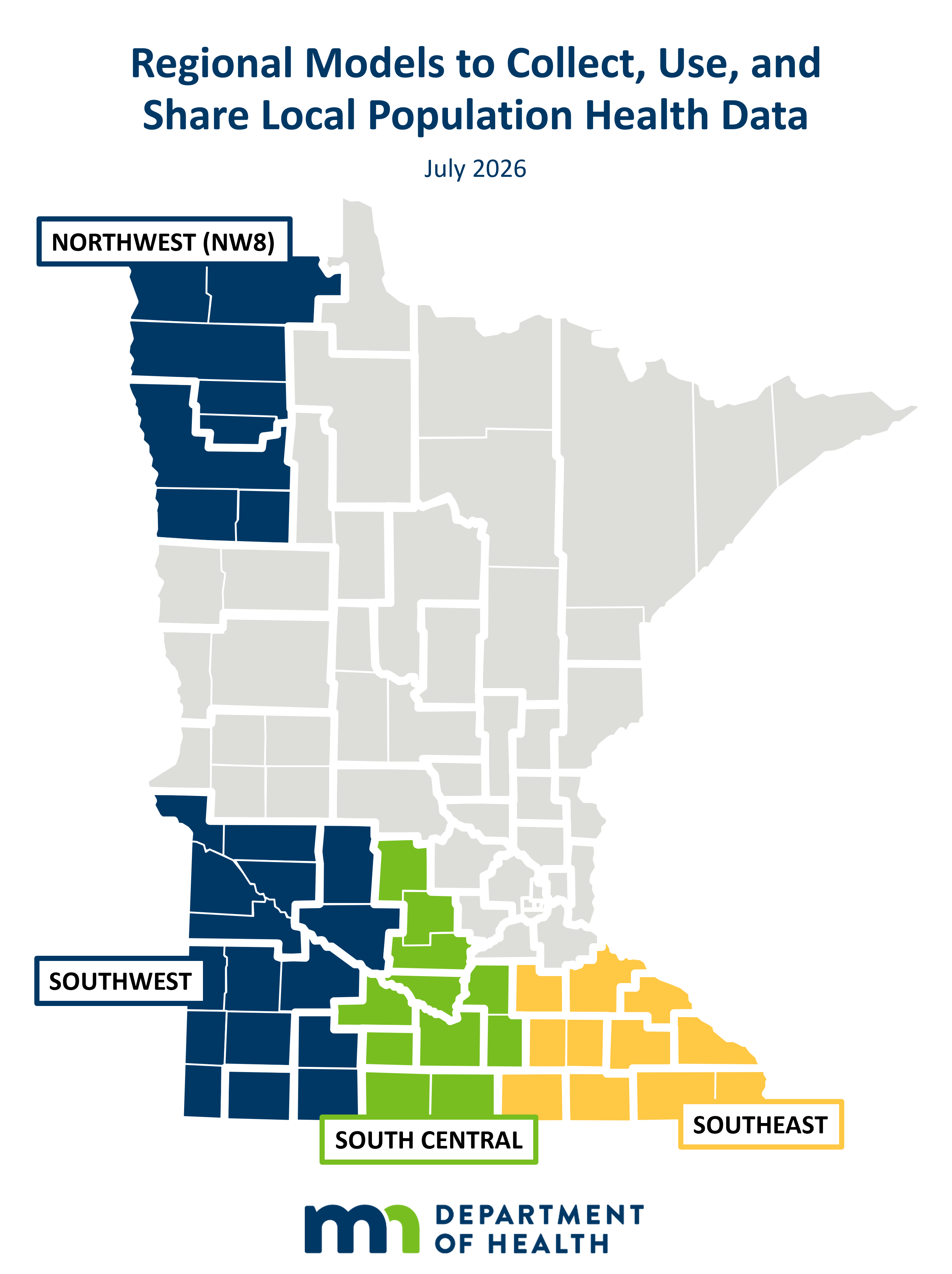
As of July 2026, four regional data models are active, with the following community health boards participating:
| Model | Participating community health boards | Counties |
| Northwest (NW8 Collaborative) | Healthy Quin Counties, Polk-Norman-Mahnomen | Kittson, Mahnomen, Marshall, Norman, Pennington, Polk, Red Lake, Roseau |
| Southwest | Countryside Public Health, Des Moines Valley Health and Human Services, Kandiyohi-Renville, Nobles, Southwest Health and Human Services | Big Stone, Chippewa, Cottonwood, Jackson, Kandiyohi, Lac qui Parle, Lincoln, Lyon, Murray, Nobles, Pipestone, Redwood, Renville, Rock, Swift, Yellow Medicine |
| South Central | Blue Earth, Brown, Human Services of Faribault and Martin Counties, Le Sueur-Waseca, Meeker-McLeod-Sibley, Nicollet, Watonwan | Blue Earth, Brown, Faribault , Le Sueur, Martin, McLeod, Meeker, Nicollet, Sibley, Waseca, Watonwan |
| Southeast | Dodge-Steele, Fillmore-Houston, Freeborn, Goodhue, Mower, Olmsted, Rice, Wabasha, Winona | Dodge, Fillmore, Freeborn, Goodhue, Houston, Mower, Olmsted, Rice, Steele, Wabasha, Winona |
The NW8 Collaborative and Southeast Regional Data Model grew out of local public health innovation projects, supported by the Minnesota Public Health Infrastructure Fund.
What's in it for local public health?
- Increases a health department’s capacity to effectively access, use, and share data internally among program areas and externally with local partners and community members
- Increases local public health’s ability to use data more quickly and responsively to identify and support its community’s health priorities
- Gives local public health faster access to public health surveillance data to inform and respond to emerging issues
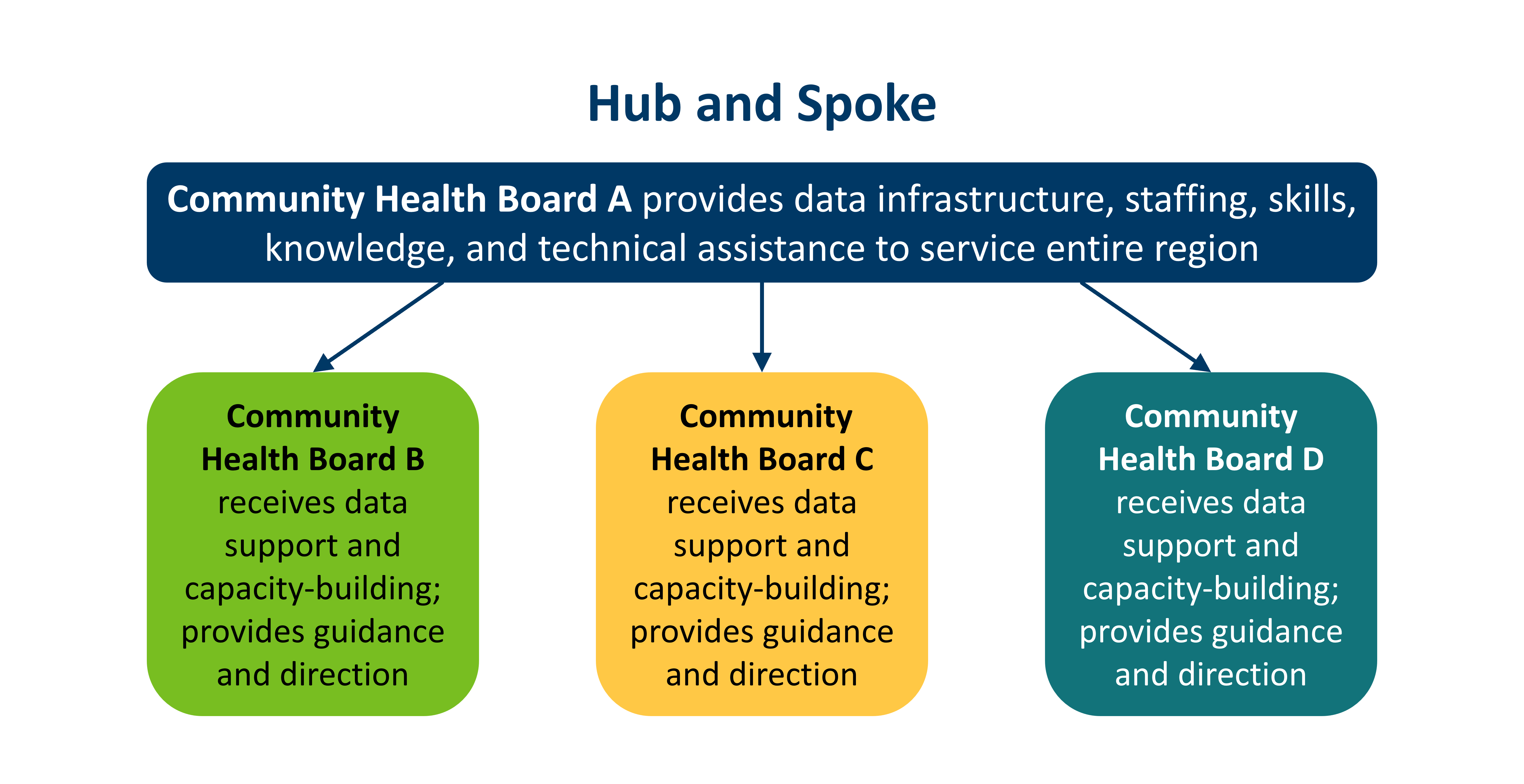
- Builds data knowledge, skills, and abilities: An entire region can share infrastructure and FTEs; not every county needs its own analyst/epidemiologist
- Creates infrastructure for regional data sharing and collaboration, where each community health board benefits and has a voice
- Facilitates collaboration and collective problem-solving across a region with others who understand regional opportunities and challenges
- Builds local expertise, collaboration, innovation, and processes specific and responsive to the regions' unique context, needs, and relationships
What's in it for MDH, Minnesota's public health system, and Minnesotans?
- Grows local capacity across the state to access, use, and share public health data, so that no matter where someone lives, they’re covered by a public health department that’s accessing, using, and sharing population health data effectively
- Reduces geographic and population disparities in data capacity, so that where someone lives doesn’t determine their health department’s level of data capacity
- Builds trust in public health by responding to data needs and requests more quickly, more effectively supporting collaboration with and requests from policymakers and community partners
- Demonstrates fiscal responsibility by using limited funds to reduce local staff duplication, capitalize on regional relationships, and leverage economies of scale for population health data
- Streamlines and reinforces relationships between state and local data experts by building fewer (yet stronger) “bridges” for data across different levels of government
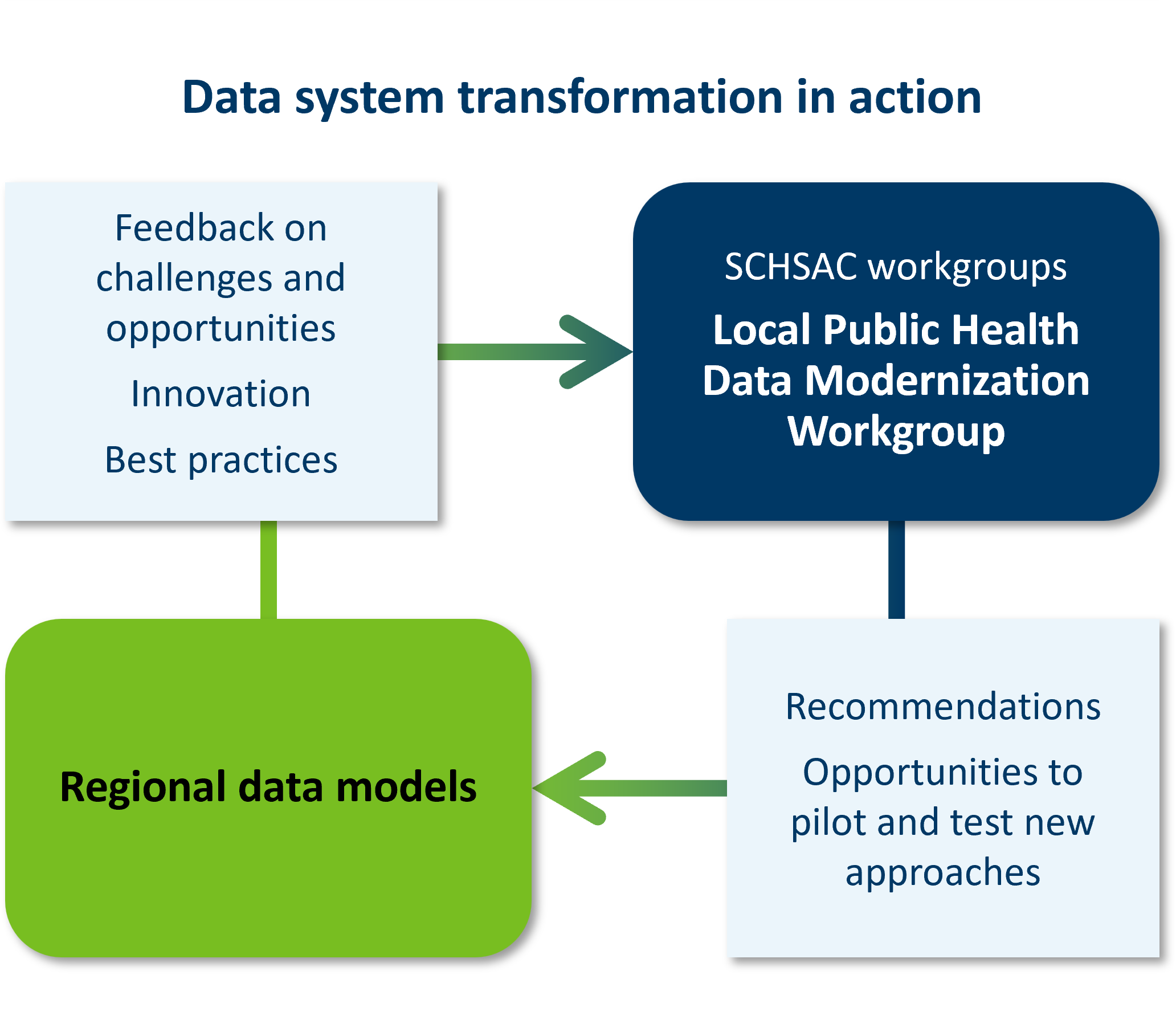
An example of data systems transformation in action: Minnesota's Southeast regional data model developed a new data-sharing approach with the MDH Office of Vital Records. Due to the success of that approach, the data sharing process/language was included in the local public health-MDH master grant agreement, and now out-of-state vital records data is available to all local public health agencies in Minnesota.