
2026 Public Health Laboratory Newsroom
After a Flood, Minnesota’s Private Wells Depend on the Public Health Lab
In Minnesota, around 500,000 private wells provide water for drinking and other household uses. A major flood could infect these wells with dangerous bacteria. It is very important to test flooded well water for a wide range of contaminants as soon as possible.
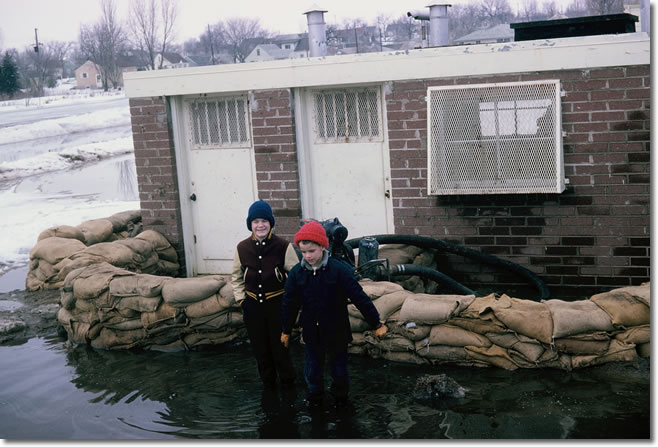 The Minnesota Environmental Laboratory, a section of the Minnesota Public Health Laboratory, stands ready to test thousands of well water samples in the event of a major flood. The lab has test kits prepared and the infrastructure in place to get them to well owners. It also has the expertise and specialized equipment to quickly analyze water samples for bacteria.
After the Minnesota legislature makes a state of emergency declaration for a flood, the Minnesota Environmental Laboratory launches into action, along with the Minnesota Department of Health’s Well Management Program and Drinking Water Protection Program. The lab sends test kits and instructions to counties. The counties then disperse the kits to homeowners with private wells.
Private well owners follow the provided instructions to take water samples and then send them to the Minnesota Environmental Laboratory. The lab uses what is called a coliform test to analyze the sample for bacteria. Coliform is a group of bacteria naturally found in soil, plants, and in the gastrointestinal tracts of animals. Coliform tests are easy to set up and yield results quickly, within 24-48 hours.
If a coliform test yields a positive result, the lab tests the sample specifically for E. coli. E. coli is a common cause of gastrointestinal illness. If it is found in a high concentration in a water sample, fecal matter has likely infected the well.
The Minnesota Environmental Laboratory sends all test results to the Minnesota Department of Health's Well Management Program, which then notifies the well owners. If an owner’s water got a positive result for coliform bacteria, they should contact Drinking Water Protection and their local public health authorities. These organizations can instruct the well owner on disinfecting the well, usually by chlorinating and flushing the system.
After their well has been disinfected, an owner can submit another sample to the Minnesota Environmental Laboratory. Some wells have undergone four or five rounds of resubmissions and disinfections before their water was safe to drink. The Minnesota Environmental Laboratory, along with the rest of the Minnesota Department of Health, are committed to helping people keep their private wells safe.
Return to the 2026 Public Health Laboratory Newsroom.