
2026 Public Health Laboratory Newsroom
Testing for Cyclospora, the Parasite Causing Intestinal Disease, in Minnesota
 In July 2026, an outbreak of cyclosporiasis, an intestinal disease caused by the parasite Cyclospora, led to thousands of verified infections across more than a dozen states. Epidemiologists discovered the parasite was carried by iceberg lettuce from Taylor Farms de Mexico, which was recalled. At this writing, the outbreak has not reached Minnesota. Read more at Investigation Update: Cyclospora Outbreak, July 2026 | Cyclosporiasis | CDC.)
The Minnesota Infectious Disease Laboratory, a section of the Minnesota Public Health Laboratory, is busy analyzing samples containing Cyclospora and other similar pathogens. Within the Infectious Disease Lab, a special Enterics Unit deals with organisms that cause foodborne illness. The unit has not seen a significant increase in positive Cyclospora tests compared to recent years.
Tracking Cyclospora in Minnesota
When a patient comes to a clinic or hospital with symptoms of cyclosporiasis, a health care provider may choose to take a stool sample. Clinics and hospitals have their own laboratories to test samples for many diseases. For some diseases, like cyclosporiasis, these labs send samples to reference laboratories to confirm the presence of Cyclospora.
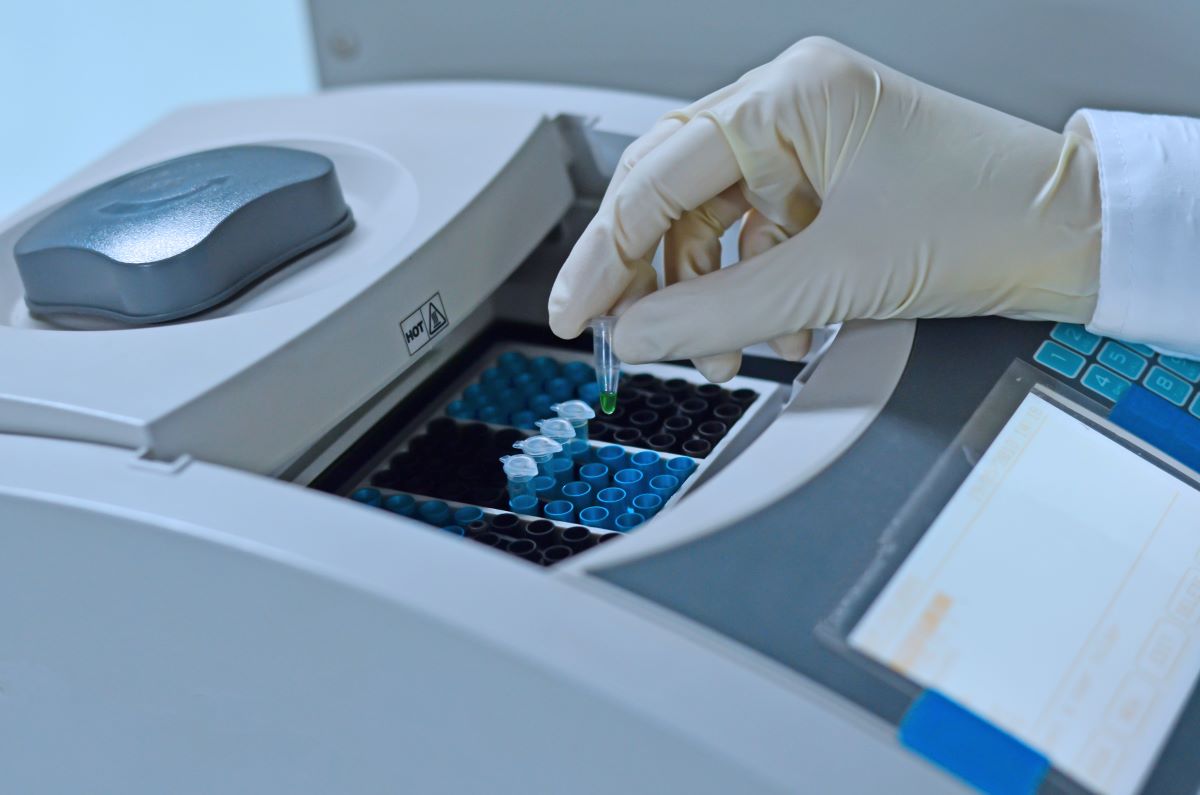 Because of Minnesota’s Reportable Disease Rule, samples testing positive for Cyclospora must then be sent to the Minnesota Department of Health. The scientists of the Minnesota Infectious Disease Lab’s Enterics Unit use an intricate process to extract microbes’ DNA from the stool sample. Then they use a polymerase chain reaction (PCR) test (pictured, left) to detect Cyclospora DNA.
If the sample has Cyclospora DNA and meets other criteria, the Infectious Disease Lab will sequence portions of the organism’s genome to reveal its species. Genome sequencing also provides information about the Cyclospora’s genotype, the specific set of genes or alleles that determine the characteristics it inherited. This is used to determine how closely related the Cyclospora organism in the sample is to others found around the world.
The Minnesota Infectious Disease Laboratory was one of the first state laboratories in the country to conduct this level of Cyclospora testing. It used microscopes to do so until soon after culture-independent diagnostic testing was first adopted in 2015. In 2018, the lab worked with the Centers for Disease Control and Prevention (CDC) to develop methods for determining the genotypes of Cyclospora samples. For many years, Minnesota’s was one of two state public health laboratories to conduct this testing fully in-house; recently five more labs have begun similar programs.
The Minnesota Department of Health is able to conduct this vital Cyclospora testing because it and its partners were named one of five Pathogen Genomics Centers of Excellence by the CDC. With funding from this program, the Infectious Disease Lab reduced the time it takes to complete Cyclospora analysis from several weeks to six to ten days.
Shortening the turnaround time for testing means disease outbreaks can more quickly be identified and addressed. The Infectious Disease Lab shares the data about Cyclospora with the Centers for Disease Control and Prevention (CDC) and the Minnesota Department of Health’s Infectious Disease Epidemiology, Prevention and Control (IDEPC) Division.
Return to the 2026 Public Health Laboratory Newsroom.