
2026 Public Health Laboratory Newsroom
Minnesota’s Central Role in Tracking Antimicrobial Resistant Organisms
 Since penicillin was discovered in 1929, antimicrobials have revolutionized medicine and saved tens of millions of lives. Researchers estimated that just one type of antimicrobial, sulfa antibiotics, decreased death rates from pneumonia 17-32%, from childbirth and related conditions 24-36%, and from scarlet fever 52-65% just 13 years after they became widely available. Antibiotics used against bacteria like Staphylococcus aureus are the most well-known, but there are many other types of antimicrobials that kill dangerous fungi, parasites, viruses, and other kinds of bacteria.
However, these pathogens are evolving, developing ways to defeat or resist antimicrobial remedies. This is known as “antimicrobial resistance,” and it poses a major threat to public health. According to the Centers for Disease Control and Protection (CDC), more than 2.8 million Americans suffer infections from antimicrobial resistant pathogens each year, resulting in more than 35,000 deaths.
One of Seven Regional Centers of Antimicrobial Resistance in the Nation
The Minnesota Public Health Laboratory is a primary hub for tracking antimicrobial resistance in the United States. It is one of seven Regional Labs of the CDC's Antimicrobial Resistance Laboratory Network, serving as the leader of the Central Region, which encompasses not only the labs of Minnesota but also of those of Arkansas, Iowa, Kansas, Missouri, Nebraska, North Dakota, Oklahoma, and South Dakota.
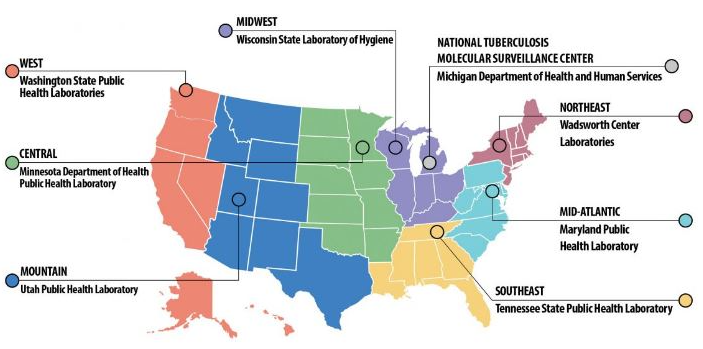
The members of the Antimicrobial Resistance Laboratory Network test samples for antimicrobial-resistant organisms and share their results with each other, the CDC, epidemiologists, long-term care facilities and other partners, and the labs in hospitals and clinics. By quickly getting test results to physicians, lab scientists can help patients get the treatment they need. It is also vital that infection preventionists have the data necessary to prevent the spread of antimicrobial resistant organisms.
As leaders in the Antimicrobial Resistance Laboratory Network, the scientists of the Minnesota Infectious Disease Laboratory, a section of the Minnesota Public Health Laboratory, assist colleagues in other labs by:
- Providing guidance for testing;
- Consulting on detecting outbreaks;
- Helping them bring on new tests;
- Performing more complicated testing that they may not have capacity for, including testing for outbreaks of diseases involving antimicrobial resistant organisms;
- Connecting other labs with each other and with the CDC;
- Regularly meeting with CDC subject matter experts about new developments.
The Minnesota Public Health Laboratory also specializes in several tests that few other clinical and public health labs conduct. For instance, the lab analyzes samples of Streptococcus pneumoniae bacteria and uses the information to help decision-makers develop the next vaccine. Streptococcus pneumoniae causes more than 2 million infections each year in in the United States. Around 30% of these infections prove resistant to antibiotics.
Bringing Together the Central Region
In June of 2026, the Minnesota Public Health Laboratory hosted a conference of the laboratory scientists and epidemiologists of the Antimicrobial Resistance Laboratory Network Central Region. Attendees reviewed both emerging and ongoing threats. One major topic was Candida auris, a fungus that can be multi-drug resistant and spreads easily in healthcare settings and long-term care facilities. Data suggest that while Candida auris case numbers continue to rise, the rate of increase has slowed down since 2022.
Another topic of discussion at the conference was point prevalence screening, a method for detecting outbreaks. Point prevalence screening helps determine if pathogens are transferring from one person to another within a long-term care facility or acute care facility. When one resident in a facility tests positive for an antimicrobial-resistant organism, health care professionals use point prevalence screening to proactively screen the other residents who are most likely affected. Health care professionals can then identify if the pathogen has spread and work to prevent any further transmissions.
In the work of the Antimicrobial Resistance Laboratory Network, the Minnesota Public Health Laboratory is an equal partner with the epidemiologists of the Minnesota Department of Health’s Infectious Disease Epidemiology, Prevention and Control (IDEPC) Division, along with the labs and epidemiologists of other Central Region states. While the labs test samples and generate data, epidemiologists work with hospitals and clinics, analyze data, develop strategies for containing the spread of antimicrobial resistant organisms, and much more.
One successful collaboration of the Antimicrobial Resistance Laboratory Network’s lab scientists and epidemiologists involved an outbreak of carbapenem-resistant Pseudomonas aeruginosa (CRPA). Carbapenems are very important antibiotics; if bacterial resistance to them became very widespread, many treatments would become ineffective. The Antimicrobial Resistance Laboratory Network tested samples and analyzed cases until they found a culprit: a specific brand of eye drops. (Read more at New Antimicrobial-Resistant Organisms Threaten Public Health.)
The Antimicrobial Resistance Laboratory Network is a primary weapon in the global battle against antimicrobial-resistant organisms. Within the Antimicrobial Resistance Laboratory Network, the Minnesota Public Health Laboratory plays a leading role.
Return to the 2026 Public Health Laboratory Newsroom.