Image


Depression and heart disease are common in Minnesota, but many people may not be aware there is a strong connection between the two conditions.
Minnesota adults with a history of depression are more likely to have hypertension than those without a history of depression (31.0% vs 26.8%). They are also less likely to take their hypertension medications as directed by their doctor (76.1% vs 84.6%). Depression increases the risk of developing heart disease and people with existing heart disease are more likely to become depressed.
Figure 1. Rates of hypertension and hypertension medication adherence in those with a depression diagnosis.
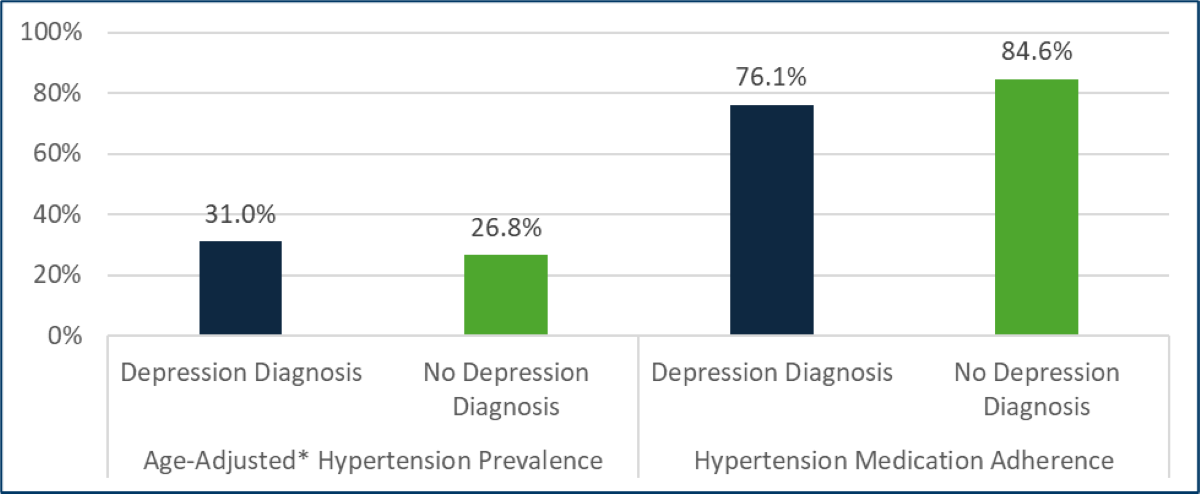
*Age-adjusted percentages are used when you want to understand differences between groups that are not due to one population being older or younger than the other. Age-adjustment is used here because younger people are more likely to report having depression and older people are more likely to have hypertension.